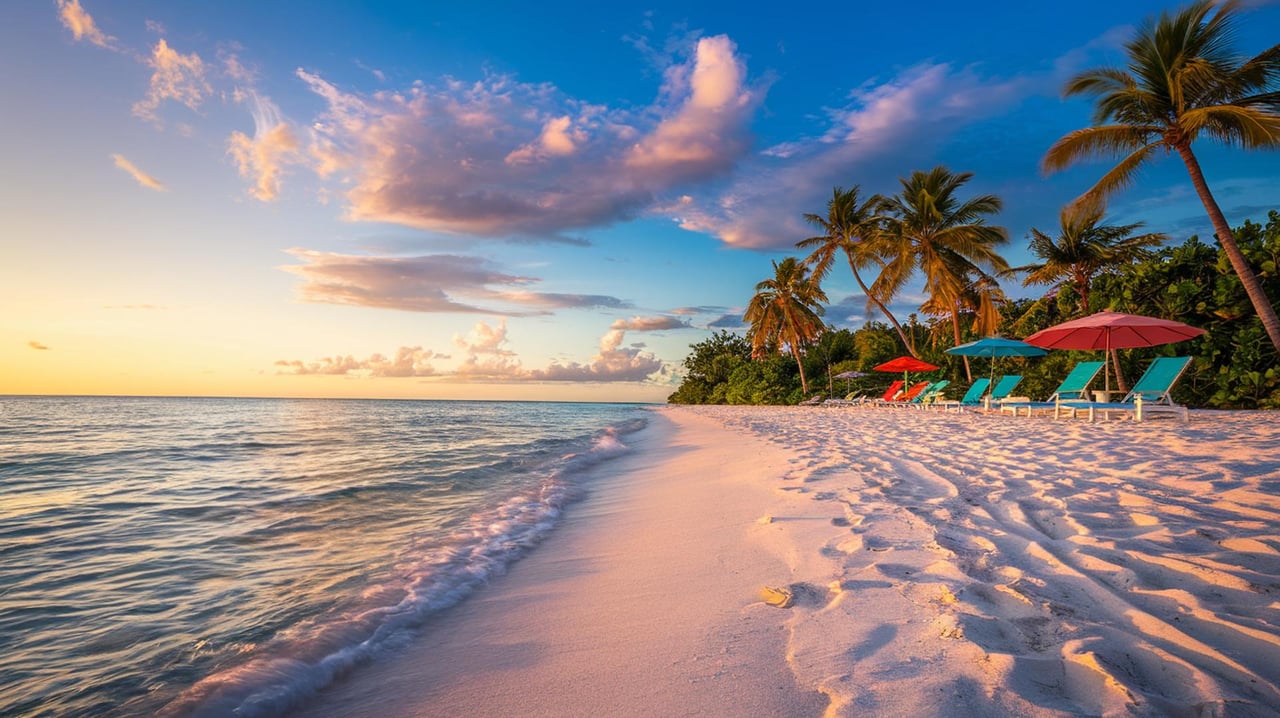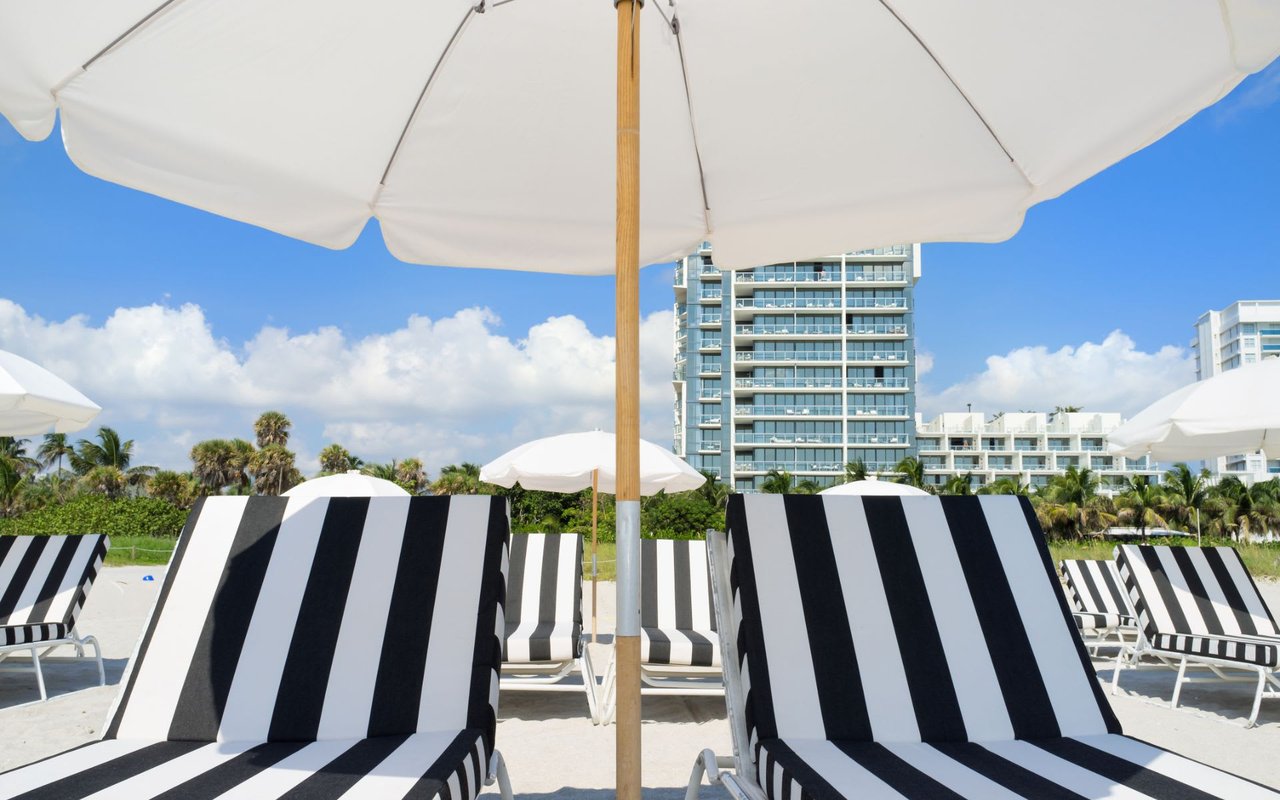
Nine in the morning, the Village Plaza lot on Ocean Boulevard fills with folding tables before most of the island has had coffee. Vendors unload boxes of honeybell oranges and stone crab claws, uncoil extension cords for a coffee cart, and set out jars of fig jam next to shark tooth necklaces packed with Siesta Beach sand. Later that day, on a stretch of that same beach south of the main pavilion, a different crowd gathers for a ritual that has nothing to do with produce or crafts. Drums arrive in car trunks. A circle forms near the green lifeguard stand. Nobody sells anything.
Both things have been happening on Siesta Key almost every Sunday since before most current residents moved here, but they have not followed the same trajectory: the drum circle has grown from a dozen friends to hundreds. That is the part worth sitting with. On an island where hospitality groups have expanded their presence, the two Sunday traditions have retained distinct, informal identities. That is not an oversight. It is the reason they have lasted.
A small Sunday market
The market offers a mix of vendors. Online reviews describe it as having limited produce and mostly jewelry and crafts. According to Siesta Sand, the market runs Sundays from 9 a.m. to 1 p.m. in the parking lot next to Beach Bazaar, and on any given week it holds somewhere around 15 to 20 rotating vendors. That is a fraction of the size of the Sarasota Farmers Market downtown or the Lakewood Ranch market at Waterside Place, which has grown into one of the largest in the region.
The Siesta Key market remains small. This year's additions are stone crab claws, fig jam, charcuterie, a new bakery stand, and a line of natural skin care products, small additions layered onto a format that has stayed the same since the market's early years. TJ Produce still shows up with pink pineapples and seasonal honeybell oranges. A longtime vendor named Lloyd Dobson, a Siesta Key resident, sells paintings of the island that hang on the walls of The Hub Baja Grill in the Village. Jennifer Brown runs Apotheca Brown Soaps and Sundries with her husband. Sisters Botanicals sells hemp-based products, including pet treats.
Market manager Mike Crider, who also sells Tunisian towels and robes at his own stand, put the appeal plainly when a local reporter asked him why people keep coming back to a market that never gets bigger. People don't have a lot of face-to-face experiences anymore, he said. That is not a growth strategy. It is the opposite of one, and it is why the market has stayed a Sunday-morning fixture rather than becoming a regional destination with a parking garage and a logo.
The same logic, later that day
The Siesta Key Drum Circle traces back to 1996, when an artist and industrial designer named David Gittens gathered about a dozen friends on Siesta Beach to mark the vernal equinox. Thirty years later, in what Sarasota Magazine's January 2026 feature calls the drum circle's 30th year, the gathering still starts about an hour before sunset every Sunday, still has no admission, still has no stage, and still cancels only for hurricanes or red tide closures. Gittens, described in that same piece as an autodidact who also built a high-performance car called the Ikenga GT and a gyroplane now held by the National Air and Space Museum, is in his 80s and still lives in Sarasota.
What has changed is the crowd. The circle now draws hundreds most weeks and, by some estimates in the magazine's reporting, up to a thousand during peak season. That is a meaningful jump from a dozen friends, and it would be the obvious moment for somebody to formalize it: sell wristbands, hire a sound engineer, turn it into a ticketed sunset event the way plenty of beach towns would. Nobody has. There is still no official organization behind it, no permit fee structure beyond what the county already requires of the beach itself, and no line between performer and spectator. One drummer summed up the rule that keeps it that way: no politics, no religion, just people supporting each other. Costumes are welcome. Somebody once brought hula hoops. It means whatever you want it to mean, one participant told the magazine. It's free.
That word carries a double meaning on Siesta Key, and it is the same meaning the farmers market vendors lean on. Free of charge, but also free of the packaging that turns a neighborhood habit into a managed attraction.
The Village's commercial core and its Sunday gatherings
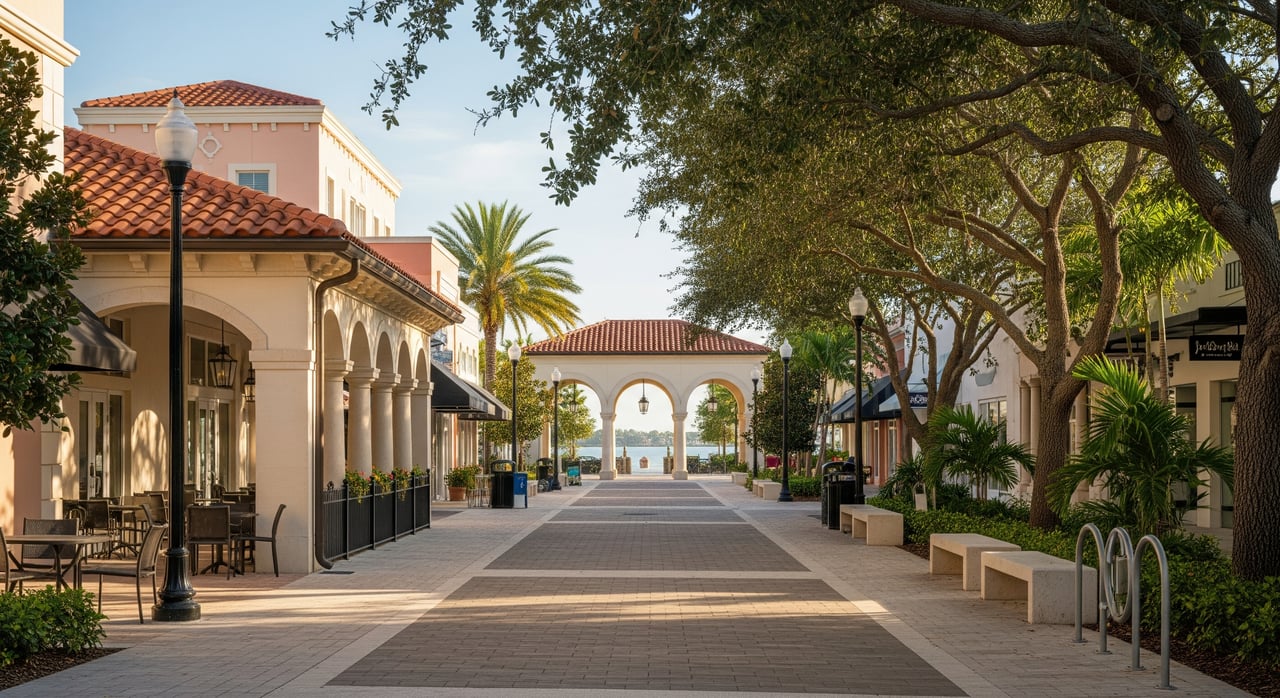
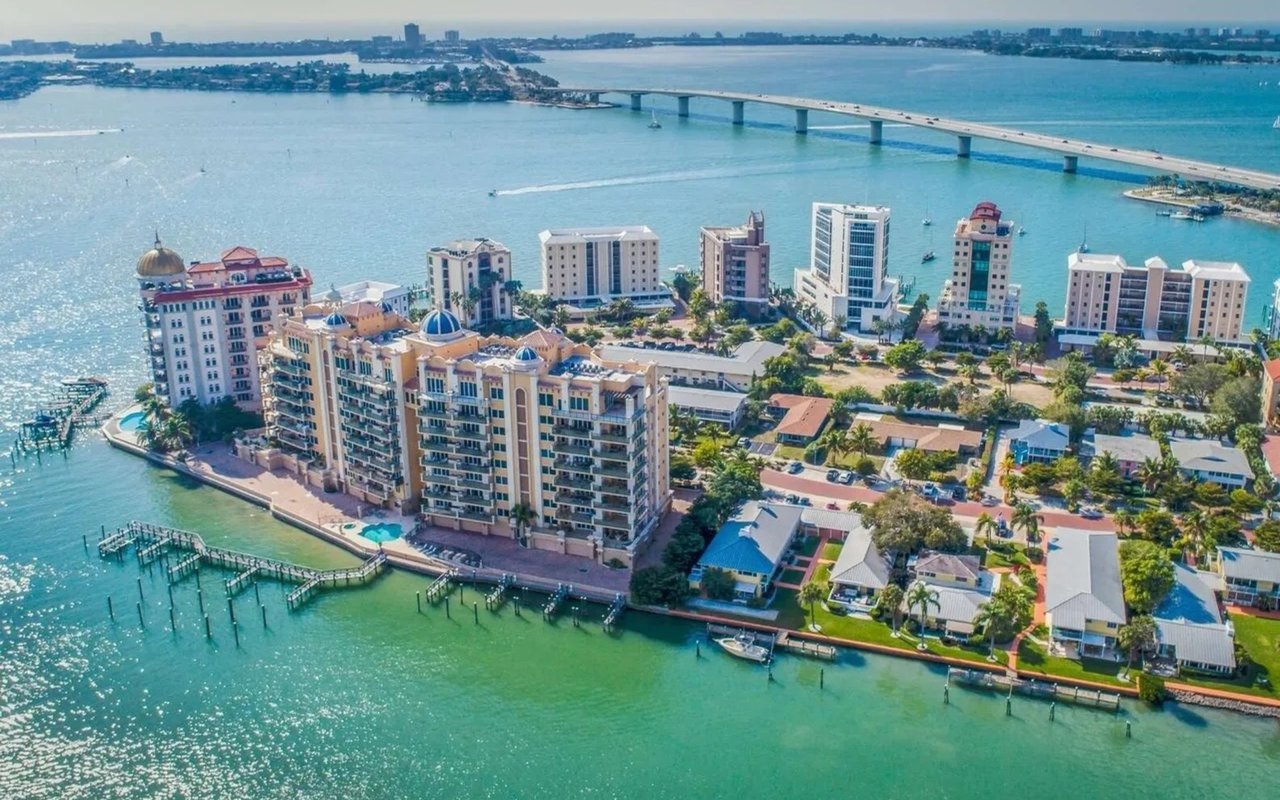
Here is one way the Village has changed. The commercial core of the Village has professionalized considerably. Above the Bar Hospitality Group, the ownership team behind the Beach Club, Summer House Steak & Seafood, The Hub Baja Grill, The Cottage, and the newer additions on Ocean Boulevard, has acquired buildings in the Village since 2014 and now holds a significant share of the busiest intersection on the island. Visitors also find paid parking lots where free spaces used to be, a trolley system, and restaurants with matching branding and centralized staffing.
Some longtime visitors say paid parking has made a short walk into a logistical decision, particularly for anyone with mobility limitations who used to rely on a handful of free spots near their favorite breakfast spot. That contrast between a more organized commercial core and informal Sunday gatherings is part of Siesta Key's Sunday rhythm. You can watch a hospitality group's newest concept fill up with a line out the door, then walk two blocks to a beach where nobody is selling anything and nobody is in charge.
The farmers market and the drum circle sit outside that consolidation entirely. Neither has an owner in the way a restaurant group has an owner. Neither answers to a corporate calendar. They are independent Sunday gatherings alongside the island's commercial core.
What's actually on the calendar this fall
The one event on Siesta Key that does run through a formal organization is the Siesta Key Crystal Classic Sandsculpting Festival, scheduled for November 13 through 16 this year on Siesta Beach. It has run every year since 2010, brings in professional sand sculptors from outside the region, and sets up a vendor village with about 100 booths, which makes it the closest thing on the island to what a scaled-up version of the Sunday farmers market might look like if anyone wanted to build one. Nobody has tried to merge the two, and the contrast is useful. The Crystal Classic is a produced event with sponsors and a website. The Sunday market and the drum circle are habits that happen to have lasted thirty years.
If you already live here, you probably know all of this without needing it written down. What might be worth noticing is how rare that combination actually is: a neighborhood where the businesses scale while the Sunday rituals remain informal, even as the drum circle has grown, and where what keeps people coming back every week is precisely what nobody has figured out how to package. That is not a small distinction. It is most of what makes a Sunday on Siesta Key feel different from a Sunday almost anywhere else on the Gulf Coast.
If you're weighing what that kind of neighborhood rhythm is worth on paper, whether you're thinking about your own place on the island or just curious what the market looks like from the outside, Shane Lewis can walk you through it. Start with a no-pressure look using the Get Your Instant Home Valuation tool, and take it from there.
This article is general information, not legal, tax or financial advice. Consult a qualified professional about your situation.