Wondering whether now is the right time to cash out your Sarasota investment property? The answer is not as simple as “yes” or “no,” especially in a market that has become much more property-specific. If you own a condo, single-family rental, seasonal property, or absentee-owned asset, the smartest move starts with a fresh look at today’s numbers, your carrying costs, and your management burden. Let’s dive in.
Sarasota Market Conditions Matter
If you are deciding whether to sell, start with the local market instead of broad headlines. In Sarasota County, the March 2026 market looked very different depending on property type, according to the March 2026 RASM market data.
Single-family homes were closer to a balanced market. They posted 890 closed sales in March 2026, with a median sale price of $485,000, 4.8 months of supply, a median of 49 days to contract, and about 88 days to close.
Condos and townhomes told a different story. They had 455 closed sales, a median sale price of $325,000, 8.1 months of supply, a median of 65 days to contract, and about 104 days to close. That higher inventory level gives buyers more choices and can create more pricing pressure for sellers.
The longer trend reinforces that split. The year-end 2025 Sarasota housing report showed single-family median prices eased 6% for the year, while condo and townhome median prices fell 15.3%.
When Selling May Make Sense
For many investors, selling now becomes more appealing when the property no longer performs the way it once did. That could mean slower appreciation, weaker cash flow, more upkeep, or simply too much hassle from a distance.
You may want to look more closely at selling if your property checks one or more of these boxes:
- It is a condo or townhome competing in a higher-inventory segment
- It takes more time and negotiation to attract buyers
- Insurance, flood exposure, HOA fees, or repairs are rising
- Short-term rental rules limit your revenue strategy
- You are tired of managing the property remotely
- Your net proceeds today may outweigh the benefit of continuing to hold
This does not mean every Sarasota investment owner should sell. It means you should stop relying on old assumptions and run the numbers based on current conditions.
Condos Face More Pressure
If your investment property is a condo or townhome, this is the area where a sale may deserve serious consideration. With 8.1 months of supply and longer timelines to contract and close, condo owners are operating in a more buyer-friendly environment than owners of many single-family homes.
That does not mean condos cannot sell well. It does mean pricing, presentation, and timing matter more. If your unit also has higher association fees, deferred maintenance concerns, or upcoming assessments, those factors can further affect your hold-versus-sell calculation.
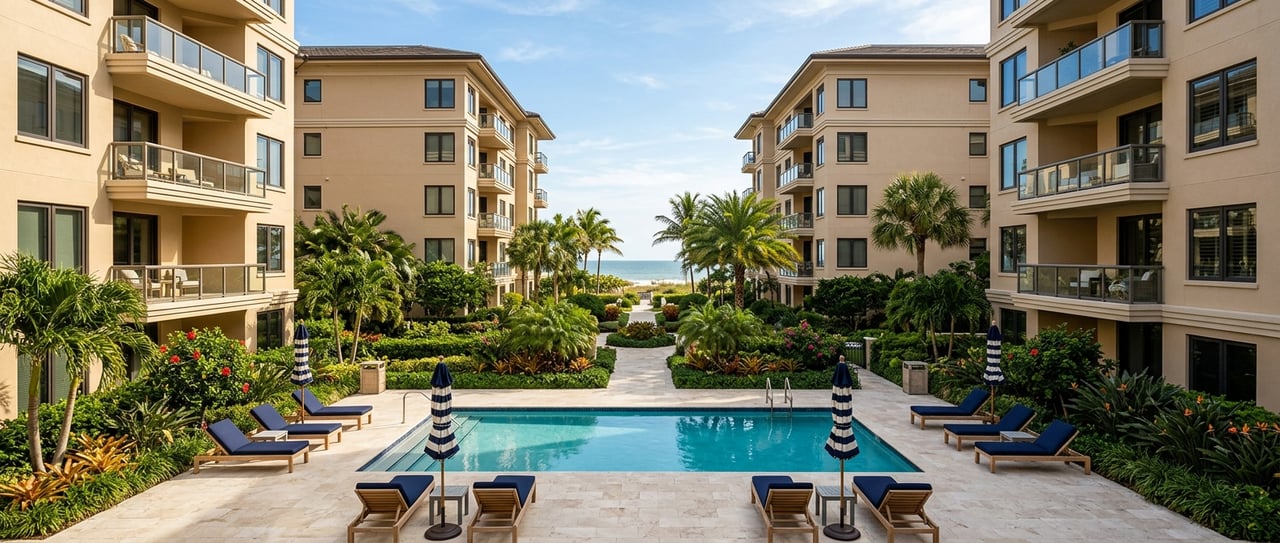
For owners of gulf-front or amenity-rich condos, a local pricing strategy is especially important. Countywide numbers are helpful, but building-specific and neighborhood-specific trends often tell the real story.
Single-Family Rentals May Still Be Worth Holding
Single-family properties in Sarasota County are currently in a healthier position overall. With 4.8 months of inventory and more stable pricing, a well-located home with manageable expenses may still support a hold strategy.
That is especially true if your property has steady tenant demand and your after-expense cash flow remains acceptable. Sarasota also continues to benefit from outside migration, which supports longer-term housing demand, as noted by RASM's report on continued out-of-state migration.
Still, even strong single-family assets should be reviewed carefully. If your taxes, insurance, maintenance, or vacancy risk have increased enough to cut into returns, your current market value may be more attractive than another year of holding.
Short-Term Rental Owners Have More to Weigh
If your Sarasota investment property depends on vacation-rental income, occupancy and local rules deserve close attention. According to Visit Sarasota County’s FY2025 tourism report, paid-accommodation occupancy was 63.3%, down from 64.8% the prior year.
At the same time, average daily rate rose to $280.27 and revenue per available room increased to $177.41. That means pricing power helped support revenue, but demand was not uniformly strong, and room nights generated fell 6.0% year over year.
If your property is inside the city limits, operating rules also matter. The City of Sarasota vacation rental requirements include registration, inspections, annual renewal, occupancy limits, parking rules, and a minimum stay of 7 full days and 7 full nights.
For some owners, those rules are manageable. For others, they make a turnover-heavy rental model much less appealing. If your property only works financially with frequent short stays, a sale may be worth considering.
Long-Term Rentals Need a Fresh Cash-Flow Check
If you lease your property long term, compare actual rent to actual costs. Sarasota County’s February 2026 rental market data showed a median rental price of $3,000 and 2,855 rental listings, with inventory up 15.63% year over year.
That points to an active rental market, but not necessarily an easy one. More listings can create more competition, and gross rent alone does not tell you whether the property is still performing well.
Before deciding to hold, review:
- Current rent or realistic market rent
- Property taxes
- Insurance premiums
- Flood insurance needs
- HOA or condo fees
- Repairs and capital improvements
- Property management costs
- Vacancy assumptions
A property can look fine on paper until carrying costs are fully added in. If the margin has narrowed too much, selling may be the cleaner financial move.
Insurance and Flood Risk Can Change the Math
In Sarasota, hazard exposure is not a side issue. It is a core part of the investment decision.
Sarasota County explains that the area’s Gulf location, flat topography, and subtropical climate create exposure to coastal, riverine, and urban flooding from heavy rain, tropical storms, hurricanes, and storm surge. The county also notes that most homeowners insurance does not cover flood damage, and flood insurance through the NFIP generally comes with a 30-day waiting period after purchase.
Flood-map updates can also affect ownership costs. Sarasota County states that new FEMA flood maps took effect on March 27, 2024, and properties in Special Flood Hazard Areas may face insurance requirements and premium changes.
On top of that, Florida’s hurricane deductible rules can leave owners with significant out-of-pocket exposure during a covered storm event. Hurricane deductibles are often based on a percentage of dwelling limits, and hurricane coverage still does not include flooding.
For absentee owners, this can be a major turning point. If the property requires more oversight, more reserve cash, and more risk tolerance than you want to carry, selling now may bring more peace of mind along with liquidity.
A Simple Sarasota Sell-or-Hold Framework
If you are unsure what to do, use a practical decision framework. Start with the property’s current value and then compare that number against the cost and complexity of continuing to own it.
Here are the main questions to ask:
What is the property worth today?
A current valuation matters more than old peak pricing or automated estimates. In a segmented market, neighborhood and property-type context can make a meaningful difference.
How quickly are similar properties selling?
Review days to contract, months of supply, and how much competition your property would face. A single-family home and a condo may have very different timelines, even in the same county.
Is the income still strong enough?
Look at real income, not just gross rent or seasonal revenue. Include vacancy, management, turnover, and any regulatory limits that affect use.
Are holding costs rising?
Insurance, flood exposure, HOA fees, maintenance, and repairs can erode returns faster than many owners expect. This is often the hidden factor that changes the answer.
Do you still want to manage it?
Your time matters too. If owning the property has become stressful, time-consuming, or difficult to oversee from out of town, that should be part of the decision.
The Bottom Line for Sarasota Investors
So, should you sell your Sarasota investment property now? If you own a condo, face rising ownership costs, rely on a restricted short-term rental model, or no longer want the demands of remote ownership, this may be a very good time to evaluate a sale seriously.
If you own a well-positioned single-family property with manageable expenses and stable demand, holding may still make sense. The key is to base your decision on today’s local data, your actual net performance, and your long-term goals rather than on market headlines alone.
If you want a clear, property-specific opinion on value, timing, and positioning in the Sarasota market, connect with Shane Lewis. You will get a thoughtful, data-driven approach tailored to your property, your timeline, and your goals.
FAQs
Should you sell a Sarasota condo investment property now?
- You may want to consider it more seriously because Sarasota condos and townhomes had 8.1 months of supply in March 2026, with longer timelines to contract and close than single-family homes.
Is Sarasota still a good place to own investment property?
- It can be, but the answer depends heavily on property type, rental strategy, carrying costs, and how hands-on you want to be as an owner.
What should you review before selling a Sarasota investment property?
- You should review current market value, days on market for similar properties, months of supply, rent or occupancy trends, insurance and flood status, HOA fees, and repair or assessment risk.
How do vacation rental rules affect Sarasota investment property decisions?
- If your property is in the City of Sarasota, local vacation rental rules such as registration, inspections, occupancy limits, parking requirements, and a 7-day minimum stay can affect cash flow and operating flexibility.
When is a Sarasota property valuation most useful for investors?
- A local valuation is most useful when you are unsure whether the property’s current market value is stronger than the financial benefit of continuing to hold it.