Wondering why two Downtown Sarasota condos with similar square footage can feel so different on paper and in real life? In this market, what you own is not just the unit. You are also buying into a building’s budget, reserve planning, service level, and amenity package. If you are comparing downtown towers, understanding how condo associations and amenities work can help you make a more confident decision. Let’s dive in.
Why condo fees matter downtown
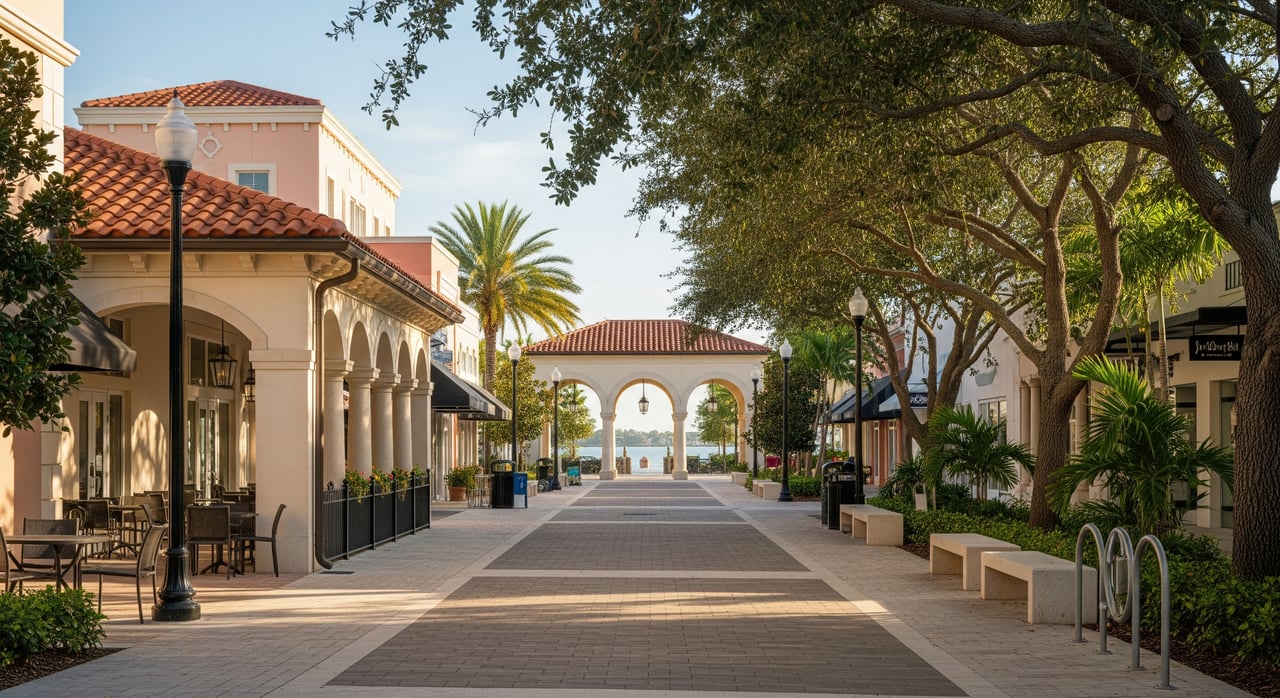
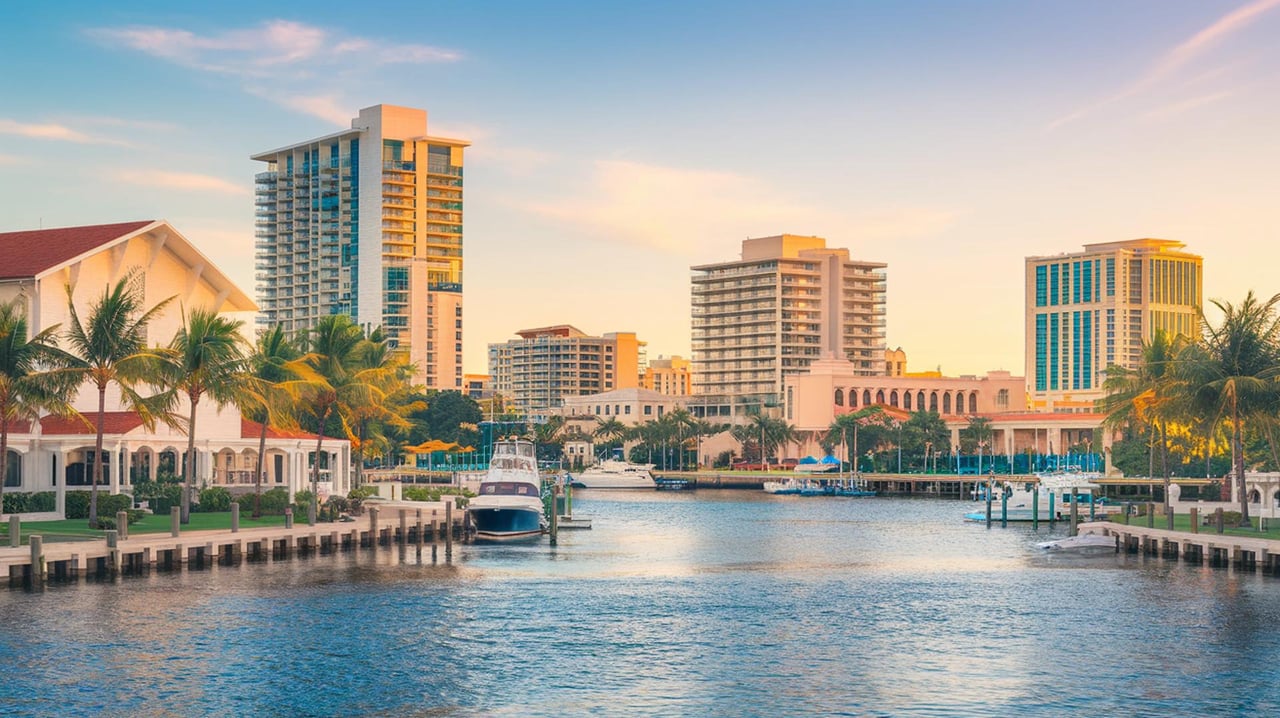
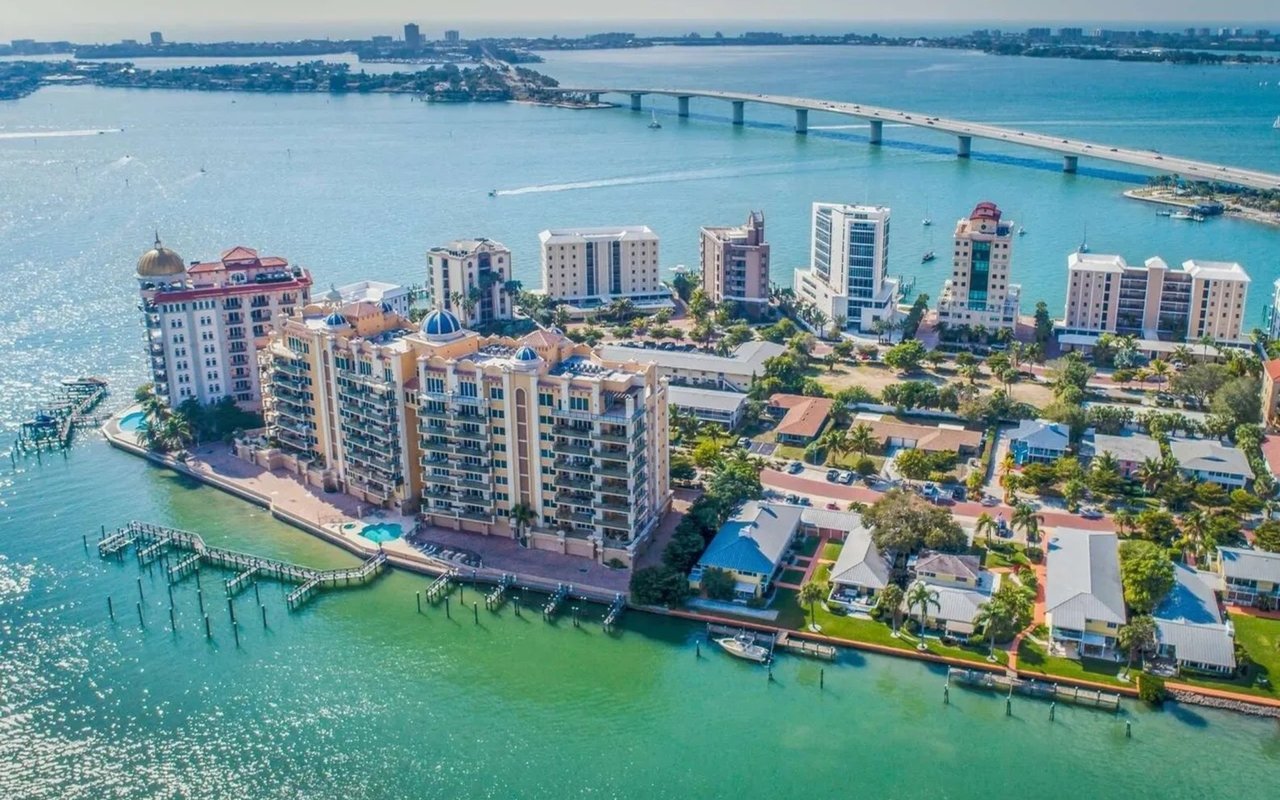
Downtown Sarasota is a walkable urban core where daily convenience plays a big role in value. Restaurants, arts venues, Bayfront Park, and The Bay all add to the appeal, so buyers often weigh location and lifestyle just as heavily as unit size.
That is one reason monthly condo fees deserve a close look. In a downtown high-rise, your fee may support much more than basic upkeep. It can reflect staffing, building systems, insurance, shared spaces, and long-term reserve funding.
Florida condo rules shape ownership
In Florida, downtown high-rise condos are generally governed as condominium associations under Chapter 718. That matters because the association is responsible for key items such as budgets, reserves, insurance, and official records.
For you as a buyer, this means due diligence goes beyond the floor plan and view. You also want to understand how the building is run, what records are available, and whether the association is planning responsibly for future repairs and replacement costs.
What monthly fees usually cover
Florida condo budgets must include operating expenses and reserve accounts for capital expenditures and deferred maintenance. Reserve items can include major future costs such as roof replacement, painting, pavement resurfacing, and other large-ticket projects.
Assessments must be collected at least quarterly and in an amount sufficient to fund anticipated operating expenses. In practical terms, that means a building with more employees, more equipment, and more common areas often has more categories to budget for.
Here are common expense areas your monthly fee may support:
- Building operations and day-to-day maintenance
- Insurance carried by the association
- Common-area utilities and upkeep
- Front desk, concierge, valet, or other staffing
- Pool, fitness, spa, and clubroom maintenance
- Reserve funding for future repair and replacement projects
The key takeaway is simple: a higher fee is not automatically a negative, and a lower fee is not automatically a bargain. What matters is what the fee includes and whether the budget appears sustainable.
Reserve studies and inspections to know
If you are buying in a residential condo building that is three stories or taller, reserve planning now deserves extra attention. Florida law requires a structural integrity reserve study, often called a SIRS, at least every 10 years for applicable buildings.
That study covers major components such as the roof, structural members, fire protection, plumbing, electrical systems, waterproofing and exterior painting, windows and exterior doors, and other high-cost related items. For many existing associations, these studies had to be completed by the end of 2025, with a limited extension path tied to milestone inspection timing.
Sarasota County also requires applicable condo and co-op buildings that are three habitable stories or taller to complete a milestone inspection at 30 years and every 10 years after that. These inspections and reserve studies can tell you a lot about a building’s physical condition and financial planning.
For budgets adopted on or after December 31, 2024, owners generally may not waive or underfund reserves for SIRS items. That is important because underfunded reserves can increase the risk of unexpected special assessments.
Why amenities affect your costs
Amenities are a big part of the Downtown Sarasota condo lifestyle, but they also influence the budget. A boutique building with fewer residences and fewer shared features may have a different cost structure than a larger waterfront tower with extensive staffing and club-style common areas.
Current downtown buildings show how wide that range can be. Bay Plaza has 100 units, Rivo at Ringling has 106 residences, DeMarcay has 39 private residences, and the Ritz-Carlton Residences Sarasota Bay has 78 residences.
That difference in scale can change how costs are spread across owners. It can also shape the overall living experience, from privacy and staffing to the number of shared facilities you help support.
Common amenity patterns in downtown towers
As you compare buildings, you will likely see a few recurring amenity categories. Some towers focus on basics plus convenience, while others lean into a more service-driven or resort-style experience.
Staffing and access
Staffing is one of the clearest differences between buildings. Bay Plaza advertises 24/7/365 valet and concierge service, Rivo at Ringling lists front-desk coverage, DeMarcay features 24-hour valet, and the Ritz-Carlton Residences describes 24-hour dedicated staff and concierge plus dedicated valet and optional self-parking.
For some buyers, that level of service is a major benefit, especially for part-time ownership or a lock-and-leave lifestyle. For others, it may be less important than keeping overhead lower.
Parking and storage
Parking and storage can have a real effect on both daily convenience and long-term value. Rivo at Ringling includes indoor secure parking and resident storage units, while the Ritz-Carlton Residences states that each residence has two assigned parking spaces, individual humidity-controlled storage, and secured bike storage.
Before you buy, confirm whether parking is deeded or assigned, whether the setup is self-park or valet managed, and whether storage is included. These details vary widely by building and can be surprisingly important once you start living there.
Shared lifestyle spaces
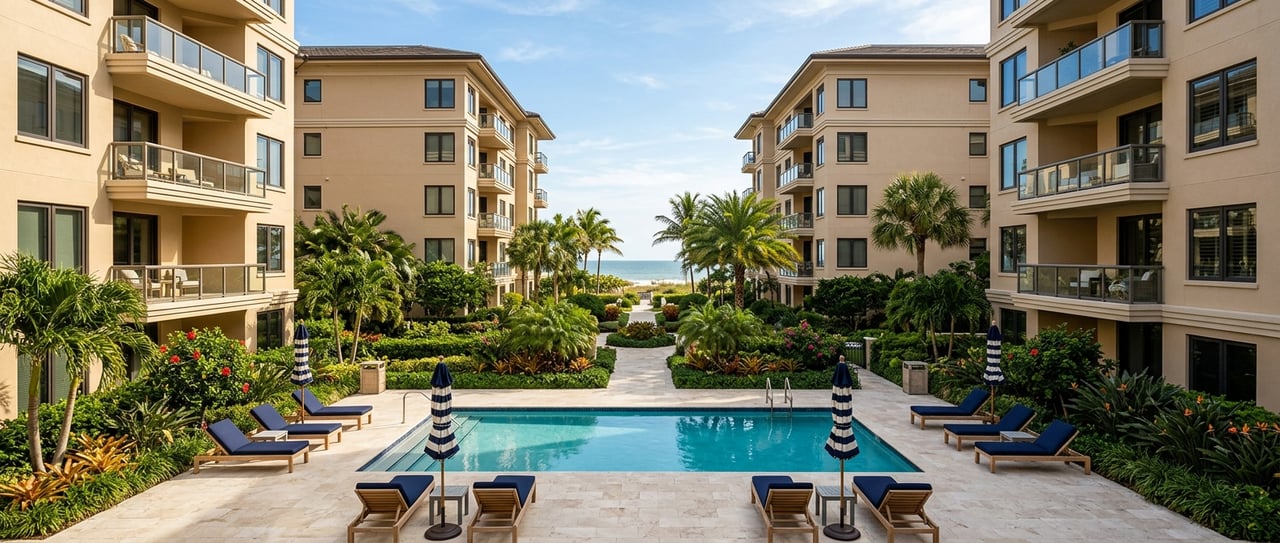
Shared spaces are another major fee driver. Rivo includes a tropical atrium, fitness center, heated pool and spa, sundeck, outdoor grill, and social or conference room. Bay Plaza advertises a heated pool, spa, fitness center, sauna, and steam rooms.
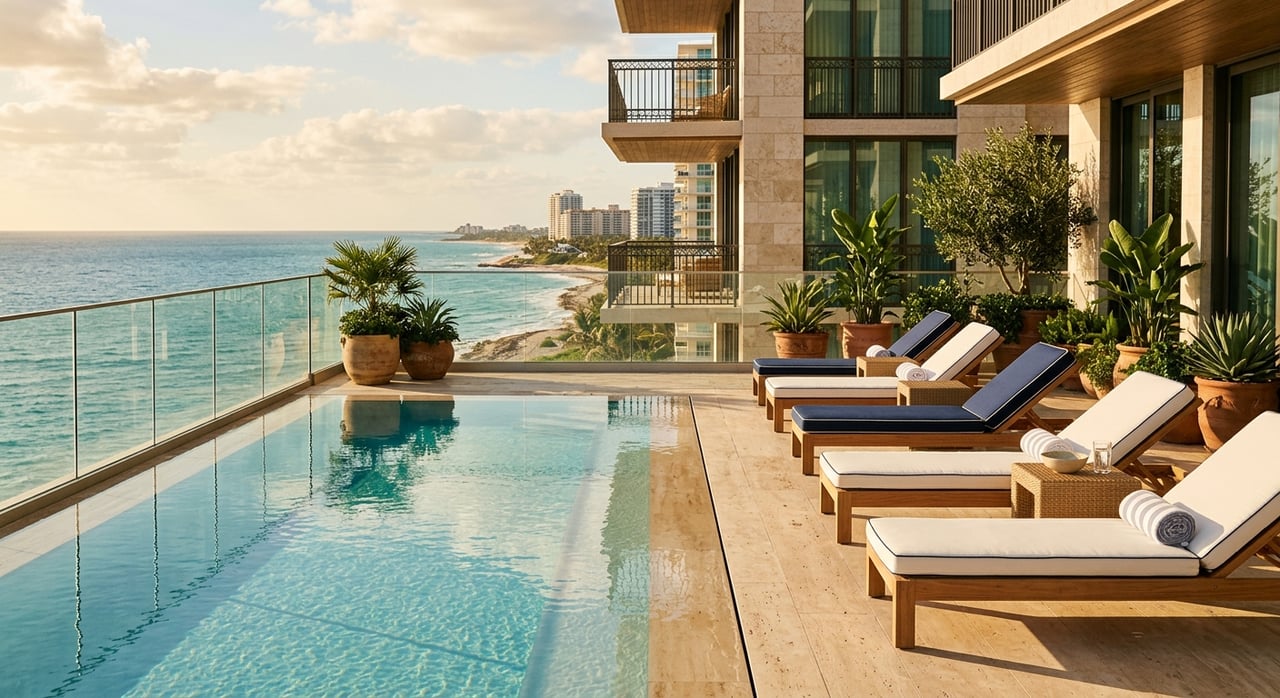
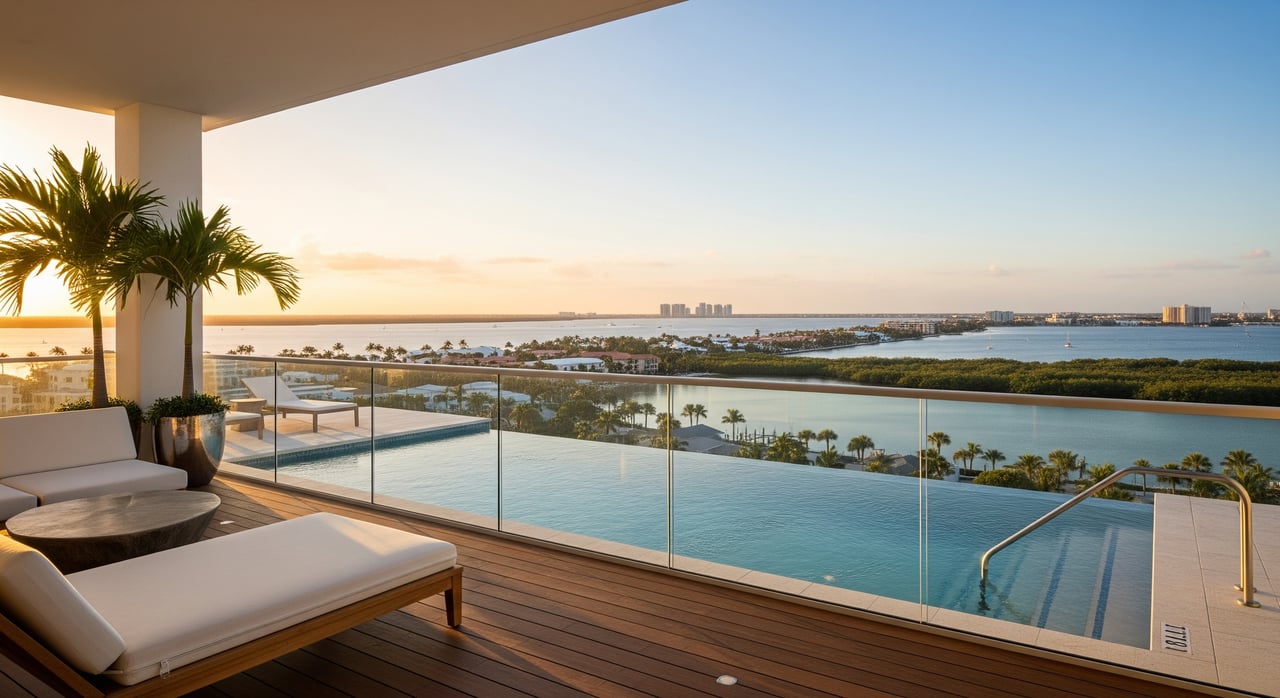
DeMarcay includes a rooftop pool, clubhouse, outdoor kitchen, and fitness center. The Ritz-Carlton Residences adds social rooms, a news café, a dog park, pet washing, and a private Harbor Club component.
Included amenities versus separate costs
One of the easiest mistakes buyers make is assuming every advertised amenity is included in the regular condo assessment. In some luxury projects, club-style features may be structured separately from the condo fee.
For example, the Ritz-Carlton Residences FAQ notes that the Harbor Club is a member-owned private club, while residential owners have access to certain club facilities. That is why it is smart to verify whether a club, marina, or other premium service is included in the monthly assessment or billed separately.
What documents you should review
Florida law gives buyers access to an important set of condo documents. For a resale purchase, the seller is required to provide the declaration, articles, bylaws and rules, annual financial statement and budget, the FAQ sheet, and any applicable milestone inspection summary or structural integrity reserve study materials.
Associations are also required to keep official records that include items like minutes, insurance policies, accounting records, budgets, reserve studies, inspections, contracts, permits, and the current question-and-answer sheet. For larger associations, certain documents must also be posted digitally on the association website or app.
These records can help you look past the marketing brochure and understand how the building actually operates. If required documents are not delivered on time in a resale transaction, the contract may be voidable under Florida law.
Smart questions to ask before you buy
When you compare Downtown Sarasota towers, it helps to use the same checklist for every building. That makes it easier to judge value on more than price per square foot.
Ask questions like these:
- Is parking included, and if so, how many spaces come with the unit?
- Are the parking spaces deeded, assigned, self-park, or valet managed?
- Is storage included, and is it climate-controlled?
- What amenities are included in the monthly assessment?
- Are any club, marina, or premium services billed separately?
- Do the pet and rental rules fit how you plan to use the property?
- Is the current budget fully funding reserves?
- Is there any known or likely near-term special assessment?
- Have milestone inspection and SIRS requirements been completed, if applicable?
A consistent checklist helps you compare buildings more clearly and avoid surprises after closing.
How to compare value more accurately
In Downtown Sarasota, condo value is often a bundle of factors rather than a simple price-per-square-foot calculation. Location still matters, of course, but so do service level, parking convenience, storage, amenity intensity, and reserve discipline.
That means the better value is not always the unit with the lowest fee or the biggest floor plan. It is often the property where the building’s lifestyle, financial structure, and long-term maintenance planning fit your goals.
If you are buying for seasonal use, you may care more about valet, concierge support, and lock-and-leave ease. If you plan to live there full time, parking setup, storage, pet rules, and the feel of the shared spaces may carry more weight.
A practical approach for Downtown Sarasota buyers
The best condo purchase decisions usually come from balancing the visible lifestyle perks with the less visible association details. Rooftop pools, front-desk service, and fitness centers are easy to appreciate. Budgets, reserves, inspections, and ownership documents are where you protect yourself.
If you are weighing condo options in Downtown Sarasota, a careful building-by-building review can help you see beyond the listing photos. That is especially true in a market where convenience, service, and building quality all shape long-term value.
When you want a local, data-driven perspective on Downtown Sarasota condos, Shane Lewis can help you compare buildings, ask sharper questions, and move forward with confidence.
FAQs
What do Downtown Sarasota condo fees usually pay for?
- Downtown Sarasota condo fees commonly help cover operating expenses, insurance, common-area upkeep, staffing, amenity maintenance, and reserve funding for future major repairs or replacements.
What is a structural integrity reserve study in a Florida condo?
- A structural integrity reserve study is a required review for applicable residential condo buildings that looks at major components such as the roof, structure, fire protection, plumbing, electrical systems, waterproofing, exterior painting, windows, and exterior doors to help plan reserve funding.
What is a milestone inspection for Sarasota County condos?
- In Sarasota County, applicable condo and co-op buildings that are three habitable stories or taller must complete a milestone inspection at 30 years and every 10 years after that.
What documents should buyers request for a Downtown Sarasota condo resale?
- Buyers should review the declaration, articles, bylaws, rules, annual financial statement and budget, the FAQ sheet, and any applicable milestone inspection summary and structural integrity reserve study materials.
How do amenities affect Downtown Sarasota condo costs?
- Amenities can increase costs because buildings with more staff, more mechanical systems, and more shared spaces usually have more operating and reserve expenses to fund.
Why are parking and storage so important in Downtown Sarasota condos?
- Parking and storage matter because the number of spaces, whether they are deeded or assigned, the parking format, and whether storage is included or climate-controlled can vary significantly by building and affect both convenience and overall value.