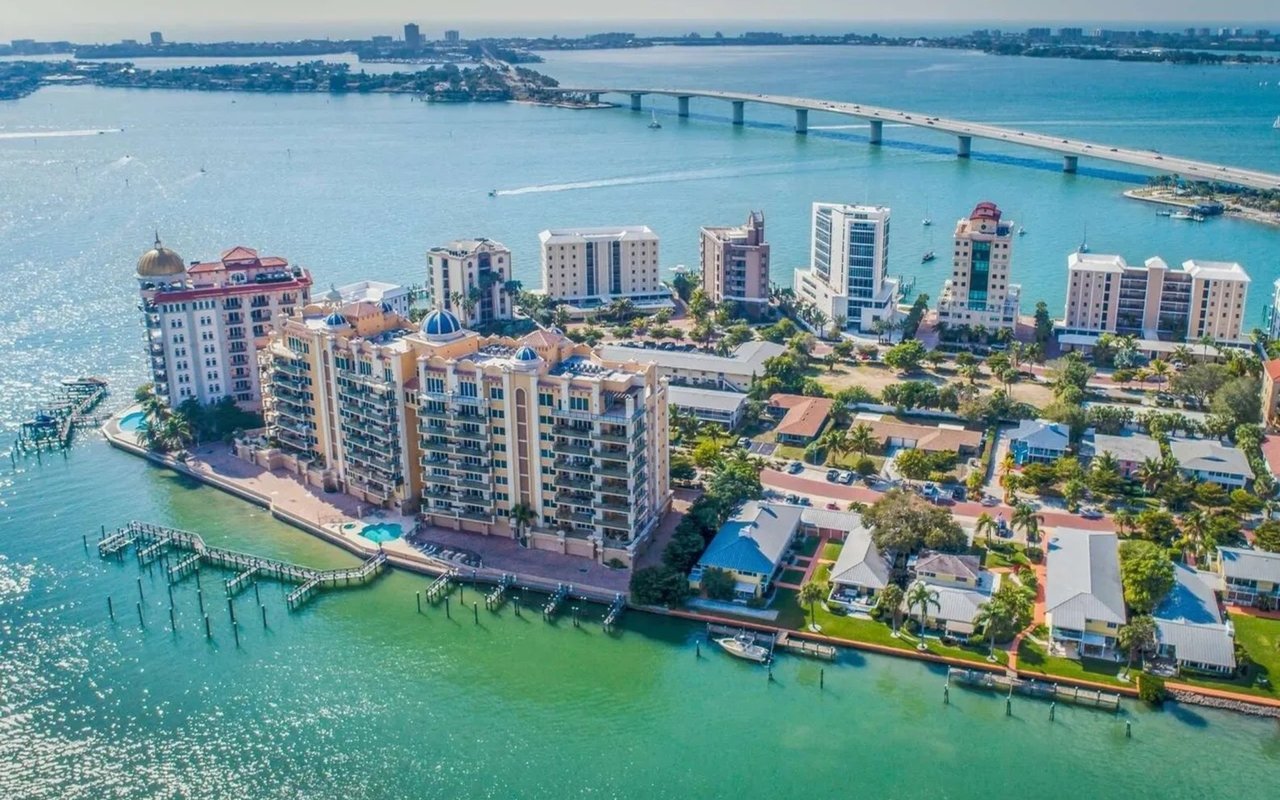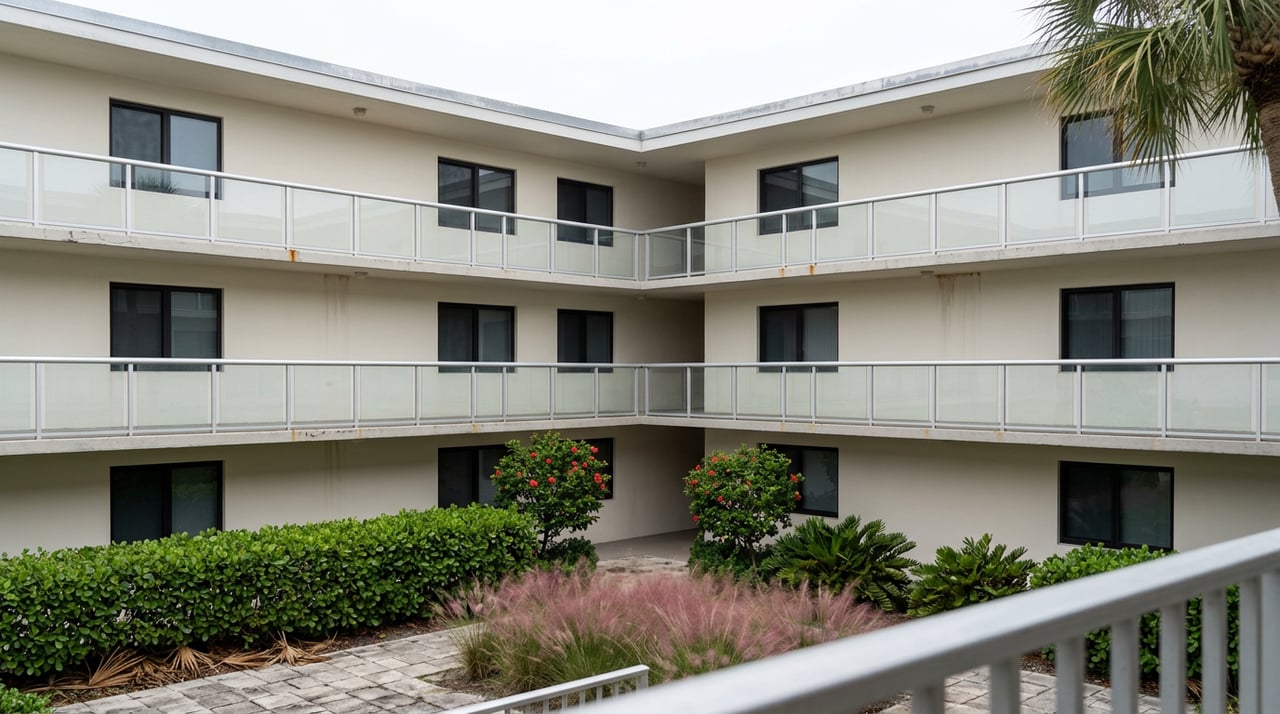
Two condos, same block on Siesta Key, similar square footage, similar view of the water. One lists a monthly HOA fee of $410. The other lists $680. Most buyers walking a spreadsheet of listings would circle the cheaper one and move on. That instinct used to be reasonable. In 2026, on a barrier island where nearly every condo building is old enough to trigger Florida's structural inspection laws, it is often backward.
The cheaper fee is not proof of a well-run association. It is frequently the opposite: proof that a building deferred the reserve funding it was supposed to be collecting for a decade or more, and that the bill is either already assessed or about to be. The building charging more may simply be the one that started paying its own way years ago, before the state made it mandatory.
This is the mechanism that changed underneath Siesta Key condo buyers this year, and it did not come from a single new law. It came from three separate deadlines landing in the same twelve-month window.
The reserve waiver era ended, and the timing was not gradual
For decades, Florida condo associations could vote to waive or underfund reserves, which is exactly how boards kept monthly fees flat while roofs, balconies, and concrete aged underneath owners who had no idea what was coming. Senate Bill 4-D, passed in 2022 after the Champlain Towers South collapse in Surfside, ended that option for buildings three stories or taller. Amendments through SB 154 and House Bill 913 pushed the compliance dates out slightly, but the core deadlines held.
Full reserve funding based on a completed Structural Integrity Reserve Study became mandatory starting January 1, 2026, for budgets adopted after December 31, 2024. Associations that paired their SIRS with a required milestone inspection got a final extension to December 31, 2026. Everyone else's grace period is already over. On top of that, House Bill 1021 requires any association with 25 or more units to post its governing documents, budgets, and reserve studies where owners and prospective buyers can actually see them, a transparency rule that took effect at the start of this year.
None of this is theoretical for Siesta Key specifically. Most of the island sits within three miles of the coast, which triggers the milestone inspection requirement at 25 years of age rather than 30. That covers a large share of the condo inventory buyers are actively shopping right now.
What a low fee is actually telling you
A monthly HOA fee is the visible half of a two-part number. The invisible half is how much of that fee has been going into reserves against how much the building's own SIRS says it needs to be collecting. Before this year, a board could set that second number to zero and nobody outside the association would know unless they asked for the reserve study directly.
That gap is closing. A building with a fee that looks low relative to its age and its coastal exposure is now more likely to be a building still catching up on a mandatory funding schedule, not one that found a way to run cheaper. When that catch-up arrives, it does not arrive as a gradual fee increase. It arrives as a special assessment, and recent cases across Sarasota County have run well into five figures per unit, with some reaching into six figures where milestone inspections uncovered structural deterioration alongside the reserve shortfall.
| Date | What changes |
|---|---|
| January 1, 2026 | Full SIRS-based reserve funding becomes mandatory for most associations. Waivers are no longer legal for structural components. |
| August 3, 2026 | Fannie Mae and Freddie Mac retire Limited and Streamlined condo reviews. Buildings over 10 units now face a Full Review of budgets, reserves, and insurance on nearly every conventional loan application. |
| January 4, 2027 | The minimum reserve allocation required for warrantable status rises from 10% to 15% of a building's annual budgeted assessment income. |
The building that did it early
Harbor Towers Yacht and Racquet Club, a 210-unit waterfront community on Midnight Pass Road, offers the clearest contrast available on the island right now. The association started raising money for a full exterior envelope renovation around 2019, replacing windows and sliding glass doors and redoing much of the building's stucco. The project ran nearly two years and cost $14 million, funded by a special assessment the association levied on its own timeline, years ahead of any state mandate.
The scaffolding came down in mid-August 2024. Weeks later, Hurricane Helene brought floodwaters that covered roughly 80% of the property, followed shortly by Milton. Harbor Towers came through comparatively unscathed. General manager David Krause has described the goal in blunt terms: no special assessments, because if the work gets done on schedule, the money is already in the bank when it is needed.
That is the version of a well-managed building the new federal financing rules are now explicitly rewarding, and the version an underfunded building is explicitly being penalized for not being.
The mechanism that turns a low fee into a closing problem
Reserve underfunding used to be primarily a special assessment risk. In 2026, it became a financing risk too, and this is the part of the story most Siesta Key buyers have not caught up to yet.
Fannie Mae and Freddie Mac announced coordinated policy changes in March 2026 that reshape how condo loans get approved. As of August 3, 2026, both agencies retired the fast-track review processes that used to let strong borrowers close without much scrutiny of the association's finances. Nearly every conventional loan in a building of more than 10 units now requires a Full Review of the HOA's budget, reserve study, delinquency rate, and insurance coverage before the loan can close.
A second change lands January 4, 2027. Associations will need to be funding reserves at a minimum of 15% of their annual budgeted assessment income, up from the current 10% floor, unless they can rely on a qualifying reserve study funded to its highest recommended level. Buildings sitting at the old 10% threshold have about four months left to adjust before that deadline arrives.
Fail either standard and the entire building becomes non-warrantable, not just the unit in question. Every owner in that association loses access to standard conventional financing and gets pushed toward portfolio loans that typically require larger down payments and carry higher rates. That shrinks the pool of buyers who can finance a purchase there, which is exactly the kind of pressure that shows up later as a longer time on market and softer resale pricing, regardless of how nice the unit itself looks.
The math connects directly back to the fee on the listing sheet. A board that has been underfunding reserves to keep the monthly number attractive to buyers is the same board most likely to be sitting below the new 15% threshold when the January 2027 deadline arrives.
What to actually request before writing an offer
None of the documents that answer these questions live in the MLS listing. They have to be requested from the association directly, and the request should happen before an offer goes in, not during the due diligence period after it is already signed.
- The most recent Structural Integrity Reserve Study and confirmation it has been filed with the state
- Milestone inspection status, including whether the building has completed Phase 1 or been required to move to Phase 2
- The current reserve funding percentage against the SIRS recommendation, not just the total dollar balance
- Whether the building has undergone or would pass a Fannie Mae or Freddie Mac Full Review
- Any special assessment approved, pending, or discussed in the last 24 months of board meeting minutes
- The master insurance policy, including the per-unit deductible, since coverage caps changed for policies underwritten after July 1, 2026
A building that can produce all of this cleanly and quickly is telling a buyer something important on its own. A board that stalls on the request is telling a different story.
Building by building, not island by island
The county-wide numbers released for July 2026 showed closed sales rising across every major segment, but Sarasota condos took considerably longer to reach contract than single-family homes, and buyers kept scrutinizing prices, property condition, and condo finances before committing. That pattern is the market sorting itself in real time. It is not that condos are less desirable. It is that the ones without clean paperwork are taking longer to sell, while well-funded, inspection-complete buildings are moving at something closer to a normal pace.
That is the actual argument for underwriting a Siesta Key condo purchase one building at a time instead of trusting an island-wide median or a monthly fee comparison across listings. The fee tells you what the current owners are paying today. It does not tell you what the next owner might be asked to pay the year after closing.
If you are comparing buildings on Siesta Key and want someone to pull the reserve study and milestone inspection history before you fall in love with a unit, that is exactly the kind of legwork Shane Lewis does with every condo buyer, building by building rather than island by island. Reach out for a consultation, or request an instant home valuation if you are weighing a sale into this market at the same time.
A few questions worth settling upfront
Does any of this apply to single-family homes on Siesta Key? No. SB 4-D, the SIRS requirement, and the Fannie Mae and Freddie Mac condo review changes apply specifically to condominium and cooperative buildings three stories or taller. Single-family homes and duplexes are exempt from the milestone inspection and reserve study requirements entirely.
Does a high HOA fee guarantee a building is fully funded? No. A high fee can also reflect heavy amenities, elevator maintenance, or an insurance premium that has nothing to do with reserve health. The fee alone is not proof either way. The reserve study and the funding percentage against it are the only documents that actually answer the question.
How do I find out if a specific building would pass a Full Review before I write an offer? Ask the association for its most recent reserve study and current operating budget, then have your lender run those numbers against Fannie Mae's Full Review criteria before you submit an offer. Waiting until after the loan application is filed is the most common way buyers discover a warrantability problem too late to renegotiate.